- High Efficiency DNA Delivery - 3D culture시 다양한 cell에서 더 높은 발현을 가능하게 함
- Easy-to-Use - 별도 최적화 과정을 최소화한 고객 친화적 프로토콜
- Flexibility - Solid matrix scaffold와 hydrogel 3D culture 포멧 모두에 병행 가능
- Animal Origin Free -다양하고 넓은 적용이 가능
0.4 ml TransIT-3D Transfection Reagent & 2 x 12-well alvetex plates
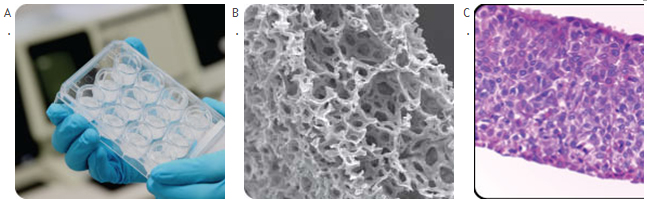
Figure 1. Alvetex® Scaffold for 3D Cell Culture. (A) Presentation of alvetex in a 12-well plate format. (B) Alvetex is a highly porous cross-linked polystyrene scaffold, which as been sectioned into 200 μm thick membranes. (C) Cross section of HaCaT cells grown for 3 days in submerged media conditions and 14 days at the air interface.
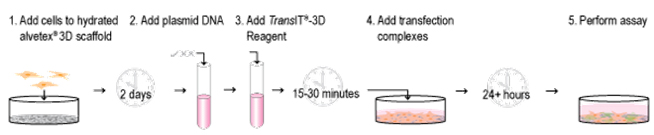
Figure 2. 3D Transient Transfection Protocol. Using the 3D Transfection System, cells are quickly adapted to 3D culture in alvetex® 12-well plates. Post-adaptation, the cells are transfected with high efficiency and minimal optimization using the TransIT®-3D Transfection Reagent.
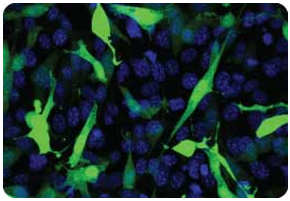
Figure 3. GFP Expression in 3D Culture. NIH3T3 fibroblast cells were seeded at optimized cell density in alvetex® 12-well plates and adapted to 3D growth. Forty-eight hours post-adaptation, cells were transfected with TransIT®-3D combined with a plasmid encoding Green Fluorescent Protein (GFP). Cells were counterstained with the nuclear stain Hoechst 33342 (blue) and visualized via confocal microscopy.
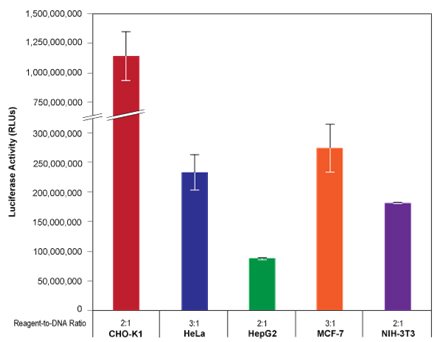
Figure 4. 3D Transfection of Multiple Cell Types. The indicated cell lines were seeded at optimized cell densities in 12-well alvetex® 3D plates and adapted to 3D culture conditions for 48 hours. Post-adaptation, cells were transfected with TransIT®-3D combined with a plasmid encoding firefly luciferase at the reagent-to-DNA ratios indicated. Luciferase activity was measured 24 hours post-transfection using a conventional assay.